Showing posts with label law. Show all posts

Thursday, November 9, 2017

McKinney's annexation plan may violate state law, attorney general says

The city of McKinney's plan to forcibly annex thousands of acres just outside the city limits may violate state law, Texas Attorney General Ken Paxton informed city officials Monday. 
According to the three-page letter from the attorney general's office, the city's annexation notices and a notice for an Aug. 28 meeting — when the McKinney City Council approved a resolution to consider annexing nearly 6 square miles of rural land in its extraterritorial jurisdiction — violated the Texas Local Government Code and the Open Meetings Act.
The attorney general's office asked the city to respond by noon Tuesday.
Landowner Harold Clyde, who lives in the proposed annexation area, called the letter the "hottest thing on the Internet" and a "game-changer."
Mayor George Fuller called it "suspect" and the timing "odd."
On Friday, Fuller announced in a Facebook post that he would not be supporting forced annexation. In that post, he lamented the inability of the city and landowners to come to terms on an agreement to delay annexation for 45 years.
The council's annexation vote had originally been set for Tuesday but it was rescheduled to Nov. 15 several weeks ago — if it goes that far.
"My decision is based on what I believe is the right thing to do, not timely letters from the AG," Fuller said in a phone interview Monday. "And I don't mean that disrespectful to the AG's office either ... but my position was formed long before receiving this letter today."
The mayor added that the city takes seriously the issues raised in Paxton's letter regarding the open meetings act and transparency, and will give a prompt response to the attorney general's office.
According to the AG's letter, the city's Aug. 28 notice and resolution do not provide a description of the property the city plans to annex. It also states the August agenda item was unclear that the city intended to give city staff permission to annex specific properties, rather than providing guidance on annexation policies.

"Behind closed doors, they decided which properties they were going to annex without telling anybody," Clyde said.
He and his family relocated to Texas two years ago with Toyota from a small house near the beach in the Los Angeles area. At their new home, they live with goats, chickens, bees and a horse.
"The city of McKinney needs to seriously look at what they did, and if they want to go forward with annexing, they need to explain how it is that what they did is acceptable. Because I don't think it is," Clyde said.

Other annexations planned

Clyde and other landowners have stood for hours in front of McKinney council members at three public hearings, giving them an earful on an annexation plan they said was being rushed to get ahead of a new state law. They called the plan un-Texan, un-American and even a "pile of crap."
The law, which goes into effect Dec. 1, will require voters' approval before their unincorporated land can be annexed.
McKinney's plan is one of several annexations underway in North Texas in an attempt to beat the approaching law. Officials in Celina, Melissa, Mesquite and other cities have told landowners in their ETJs that they plan to annex them soon.
Although the vote to annex the property is set for next week, Fuller said Monday he plans to ask the council during  Tuesday night's meeting to simply terminate the annexation proceedings right then.
"That's consistent with my statement I made three or four days ago and completely absent this letter," he said.
Read More »

Tuesday, November 7, 2017

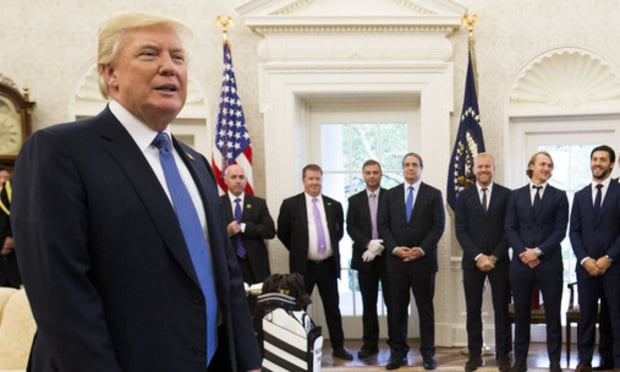
Does the Cyclist Who Flipped Off Trump's Motorcade, and Got Fired, Have a Case?


Read More »

New Lawyer's Study: GCs Have Brought The Majority Of Work In-House

Clients have figured out they don't need lawyers. We're all doomed.


More bad news for outside counsel.
Every quarter we report on the growing gap between the elite Biglaw firms and the rest of the Am Law 200. The outlook for law firms generally remains tepid, but the cream of the crop seem to keep chugging along while the rest increasingly stagnate. Well, if you’ve been looking to connect the dots, that persistent slowing of demand for legal services, here’s your culprit:
51% of in-house legal teams report that more than half of their legal activities are now conducted internally. The biggest challenge in-house legal teams are trying to solve by bringing more legal services in-house is controlling costs, followed by completing tasks efficiently.
The 2017 In-House Legal Benchmarking Report from Exterro polled a number of in-house legal personnel about their business and found that everyone’s bringing more and more under the company tent as we’ve suspected for some time. And they’re doing it for the most obvious reason of all:
When asked why they brought more work in-house, they most frequently responded that it was because they could (they had built or expanded internal capacity and now were using it), to save money, or because better software had become available.
Because I can! Perhaps this could be phrased better than invoking the go to excuse of a toddlercaught reaching into a cookie jar, but this is a serious reason that spells trouble for Biglaw. While lawyers worry about AI building robot lawyers to displace attorneys — a fear that’s mostly overblown — the real technological threat to Biglaw is in easing once formidable legal processes to the point that in-house departments present a more cost-effective option than outsourcing. Legal holds and other document preservation tasks can be handled cheaper and more cost-effectively than ever by clients with the right tools. With clients reporting that they’ll be investing in more software solutions going forward, this inward flow of work shows no signs of stopping.

Where does that leave the outside counsel landscape?
And we suspect the likely outside winners will fit into two broad categories: those who can deliver standardized services efficiently, effectively, and at a very low cost, or at least lower than can be achieved internally; and those who deliver custom and specialized services — bespoke services — that only the rare corporation is likely to invest in developing itself.
Exactly what we’ve been seeing. The bigger, badder behemoths that can churn out work product and the elite brands that boast unique legal talent (or at least that clients believe to be unmatched) are winning the day. That obviously means that the top Am Law 200 firms see steady success, but it also presents a tremendous opportunity for small law firms, especially niche boutique firms, that can offer the bespoke services clients want without wasting money on the assembly line tasks that technology can move in-house. All the while, the rest of Biglaw starts to lose out on the grunt work that once covered the overhead.
At least there’s some good news for Biglaw:
Even though corporations seem to be bringing more work inside, they report moderate to strong satisfaction with the quality of outsourced legal work done for them. Twenty-one percent of respondents replied that they were “very satisfied” and another 48% said they were “somewhat satisfied.” Only 7% reporting being “somewhat dissatisfied,” and a slim 1% answered that they were “very dissatisfied.” When asked how providers of outsourced legal services could improve, corporations’ most frequent comments were that they could be less expensive and more responsive.
Well that’s nice. But somehow I think that 21 percent of satisfaction isn’t going to pay the bills for very long.


Read More »